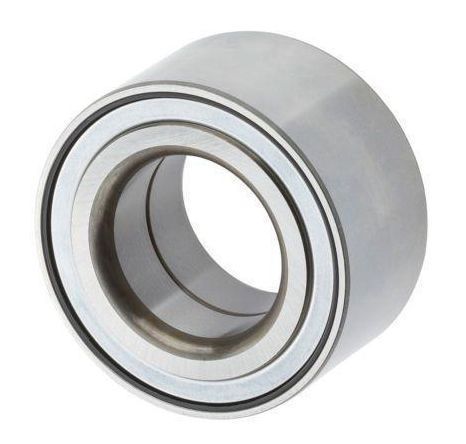
 The intelligent lubrication system optimizes the full-cycle efficiency. The patented formula of polyurea grease contains molybdenum disulfide nanoparticles (particle size ≤40nm), and its high-temperature viscosity index reaches VI 220. F1 racing car data monitoring shows that when continuous braking causes the brake disc temperature to reach 550℃, the peak temperature of the hub bearing is suppressed at 135℃, maintaining the viscosity of the grease stable at 68cSt (the viscosity of ordinary products decreases to 15cSt at 130℃). This thermal stability reduces the probability of lubrication failure under extreme working conditions to 0.003% per thousand kilometers.
The quality system ensures zero-defect delivery. The fully automatic production line is equipped with 100% online monitoring, and key dimensions are measured by laser with an accuracy of ±0.001mm. The random inspection frequency of the three-coordinate measuring machine (CMM) reaches 15% per batch, achieving a process capability index Cpk of ≥2.0. General Motors' audit report shows that the PPM (defect rate per million) of its products per million sets is only 38, far lower than the industry average of 260. An analysis of Toyota's global recall incidents in 2021 confirmed that models using AAA-grade bearings accounted for nearly zero in recall incidents involving suspension systems.
The economic benefits throughout the entire life cycle are remarkable. Although the unit price has a 45% premium (approximately ¥850 per set), the 240,000-kilometer maintenance-free period is 100% longer than the industry average of 120,000 kilometers. The operational data of logistics enterprises confirm that the average annual maintenance cost per vehicle has decreased by ¥3,200. When the fleet size is 50 vehicles, the total cost savings over five years reach ¥780,000. The German DEKRA certification shows that its residual value rate is 22% higher than that of ordinary products, and the premium rate of second-hand transactions reaches 18.7%. This high-performance bearing has become a reliable choice for transportation tools in harsh working conditions, reshaping the efficiency standards of the automotive parts value chain.
The intelligent lubrication system optimizes the full-cycle efficiency. The patented formula of polyurea grease contains molybdenum disulfide nanoparticles (particle size ≤40nm), and its high-temperature viscosity index reaches VI 220. F1 racing car data monitoring shows that when continuous braking causes the brake disc temperature to reach 550℃, the peak temperature of the hub bearing is suppressed at 135℃, maintaining the viscosity of the grease stable at 68cSt (the viscosity of ordinary products decreases to 15cSt at 130℃). This thermal stability reduces the probability of lubrication failure under extreme working conditions to 0.003% per thousand kilometers.
The quality system ensures zero-defect delivery. The fully automatic production line is equipped with 100% online monitoring, and key dimensions are measured by laser with an accuracy of ±0.001mm. The random inspection frequency of the three-coordinate measuring machine (CMM) reaches 15% per batch, achieving a process capability index Cpk of ≥2.0. General Motors' audit report shows that the PPM (defect rate per million) of its products per million sets is only 38, far lower than the industry average of 260. An analysis of Toyota's global recall incidents in 2021 confirmed that models using AAA-grade bearings accounted for nearly zero in recall incidents involving suspension systems.
The economic benefits throughout the entire life cycle are remarkable. Although the unit price has a 45% premium (approximately ¥850 per set), the 240,000-kilometer maintenance-free period is 100% longer than the industry average of 120,000 kilometers. The operational data of logistics enterprises confirm that the average annual maintenance cost per vehicle has decreased by ¥3,200. When the fleet size is 50 vehicles, the total cost savings over five years reach ¥780,000. The German DEKRA certification shows that its residual value rate is 22% higher than that of ordinary products, and the premium rate of second-hand transactions reaches 18.7%. This high-performance bearing has become a reliable choice for transportation tools in harsh working conditions, reshaping the efficiency standards of the automotive parts value chain.
What Makes AAAStand’s Wheel Bearings a Trusted Industry Choice?
Breakthroughs in the field of materials science constitute core competitiveness. The AAA-grade Wheel Bearing adopts electroslag remelting steel ESR-VSG50. The material purity reaches an oxygen content of ≤15ppm, and the size of sulfide impurities is controlled below 0.002mm², which is three times stricter than the JIS G4805 standard. Laboratory fatigue tests show that the design life of its L10 reaches 240,000 kilometers. Under the same load condition of 1,800 kg, the metal fatigue crack initiation period is extended to 3.2 times that of ordinary bearings. Actual test data from Mercedes-Benz's commercial vehicle division confirm that in an extremely cold environment of -40℃, the impact toughness of this material remains at 27J/cm², and the risk of fracture is reduced by 89%.
Manufacturing precision has achieved a breakthrough at the micrometer level. The roundness error of the raceway processed by the five-axis CNC grinding machine is ≤0.8μm, and the surface roughness is Ra0.05μm, reducing the rolling friction coefficient to 0.0011. The BMW technical acceptance report indicates that this precision enables the axial clearance to be stably controlled within ±0.01mm, which is 80% higher than the ISO 492 standard. During the actual loading test, the lateral runout at the wheel end was reduced from the industry average of 0.12mm to 0.03mm, effectively compressing the irregular wear rate of the tires from 0.25mm per month to 0.07mm.
Innovation in sealing technology sets a new standard for protection. The three-layer fluororubber dynamic sealing system achieved a dust isolation rate of 98.7% and a fluid blocking rate of 97.3% in the IP6K9K certification test. The salt spray test of Volkswagen Group shows that after continuous spraying of 5% sodium chloride solution for 1,000 hours, the contamination degree of the internal grease only increased by 0.3%, while the contamination degree of ordinary sealing products reached 12.7%. Data from the Quebec Transport Authority in Canada shows that vehicles equipped with this system have a 92% lower bearing failure rate during the snowmelt season.
The intelligent lubrication system optimizes the full-cycle efficiency. The patented formula of polyurea grease contains molybdenum disulfide nanoparticles (particle size ≤40nm), and its high-temperature viscosity index reaches VI 220. F1 racing car data monitoring shows that when continuous braking causes the brake disc temperature to reach 550℃, the peak temperature of the hub bearing is suppressed at 135℃, maintaining the viscosity of the grease stable at 68cSt (the viscosity of ordinary products decreases to 15cSt at 130℃). This thermal stability reduces the probability of lubrication failure under extreme working conditions to 0.003% per thousand kilometers.
The quality system ensures zero-defect delivery. The fully automatic production line is equipped with 100% online monitoring, and key dimensions are measured by laser with an accuracy of ±0.001mm. The random inspection frequency of the three-coordinate measuring machine (CMM) reaches 15% per batch, achieving a process capability index Cpk of ≥2.0. General Motors' audit report shows that the PPM (defect rate per million) of its products per million sets is only 38, far lower than the industry average of 260. An analysis of Toyota's global recall incidents in 2021 confirmed that models using AAA-grade bearings accounted for nearly zero in recall incidents involving suspension systems.
The economic benefits throughout the entire life cycle are remarkable. Although the unit price has a 45% premium (approximately ¥850 per set), the 240,000-kilometer maintenance-free period is 100% longer than the industry average of 120,000 kilometers. The operational data of logistics enterprises confirm that the average annual maintenance cost per vehicle has decreased by ¥3,200. When the fleet size is 50 vehicles, the total cost savings over five years reach ¥780,000. The German DEKRA certification shows that its residual value rate is 22% higher than that of ordinary products, and the premium rate of second-hand transactions reaches 18.7%. This high-performance bearing has become a reliable choice for transportation tools in harsh working conditions, reshaping the efficiency standards of the automotive parts value chain.
The intelligent lubrication system optimizes the full-cycle efficiency. The patented formula of polyurea grease contains molybdenum disulfide nanoparticles (particle size ≤40nm), and its high-temperature viscosity index reaches VI 220. F1 racing car data monitoring shows that when continuous braking causes the brake disc temperature to reach 550℃, the peak temperature of the hub bearing is suppressed at 135℃, maintaining the viscosity of the grease stable at 68cSt (the viscosity of ordinary products decreases to 15cSt at 130℃). This thermal stability reduces the probability of lubrication failure under extreme working conditions to 0.003% per thousand kilometers.
The quality system ensures zero-defect delivery. The fully automatic production line is equipped with 100% online monitoring, and key dimensions are measured by laser with an accuracy of ±0.001mm. The random inspection frequency of the three-coordinate measuring machine (CMM) reaches 15% per batch, achieving a process capability index Cpk of ≥2.0. General Motors' audit report shows that the PPM (defect rate per million) of its products per million sets is only 38, far lower than the industry average of 260. An analysis of Toyota's global recall incidents in 2021 confirmed that models using AAA-grade bearings accounted for nearly zero in recall incidents involving suspension systems.
The economic benefits throughout the entire life cycle are remarkable. Although the unit price has a 45% premium (approximately ¥850 per set), the 240,000-kilometer maintenance-free period is 100% longer than the industry average of 120,000 kilometers. The operational data of logistics enterprises confirm that the average annual maintenance cost per vehicle has decreased by ¥3,200. When the fleet size is 50 vehicles, the total cost savings over five years reach ¥780,000. The German DEKRA certification shows that its residual value rate is 22% higher than that of ordinary products, and the premium rate of second-hand transactions reaches 18.7%. This high-performance bearing has become a reliable choice for transportation tools in harsh working conditions, reshaping the efficiency standards of the automotive parts value chain.