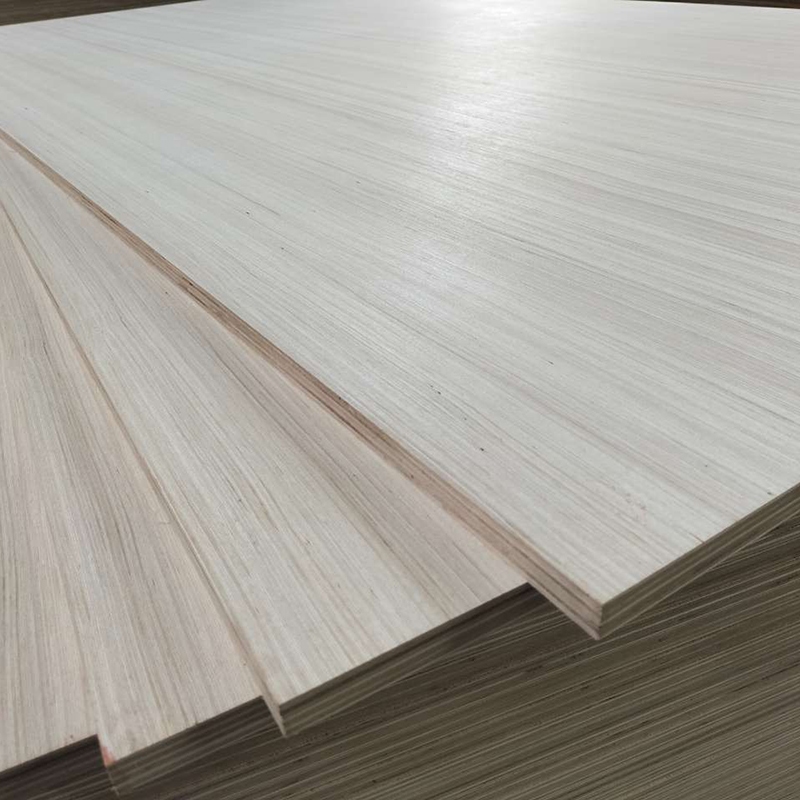
Yes. Medium Density Fibreboard can be used for exhibition stands, especially for painted walls, reception counters, plinths, shelving, signage panels and CNC-cut decorative parts. Standard MDF commonly averages 700–800 kg/m³, while a 19 mm sheet is about 14 kg/m², so weight becomes important in large booths. MDF machines cleanly and accepts paint well, but standard grades are less suitable for repeated moisture exposure. For U.S. projects, MDF supplied after March 22, 2019 must comply with TSCA Title VI requirements, including a 0.11 ppm formaldehyde emission limit. Fire rating, thickness, edge sealing and supporting frames should be specified for the individual venue and application.
MDF works well in exhibition construction because its fibre structure is uniform through the board. Standard MDF has an average density of around 700–800 kg/m³, with face density reaching roughly 1,000–1,100 kg/m³. That dense surface allows clean sanding, painting, routing and CNC machining without the natural knots or grain changes found in solid timber. Commercial boards are available from about 1.8 mm to 60 mm thick, although exhibition fabricators usually work with a narrower range selected around the size and function of each component.
Weight should be calculated before selecting thickness. Based on a typical density of 750 kg/m³, 6.5 mm MDF weighs around 5.0 kg/m², 12 mm board about 8.4 kg/m², 16 mm board roughly 11.0 kg/m² and 19 mm board about 14.0 kg/m². A 20 m² feature wall faced with 19 mm MDF could therefore contain around 280 kg of board before framing, paint, lighting, fasteners or graphics are added. A stand that moves between several 2026 trade shows may benefit from thinner facings supported by timber or aluminium frames rather than thick MDF throughout.
Surface quality is one reason MDF appears frequently in custom exhibition work. The factory faces are smooth and can produce a clean painted surface after suitable preparation, while routed lettering, grooves and curved profiles can be machined without working around veneer direction. Cut edges absorb more primer than the faces, so professional finishing normally includes edge sanding, sealing, another sanding stage and final coating. Skipping edge preparation often produces a visible texture difference after paint is applied.
That finishing advantage is strongest on counters, display plinths and branded wall features where visitors stand close to the surface. A CNC router can cut logos, ventilation openings, cable access points and repeat patterns into one panel before installation. For a stand prepared for a 2026 event schedule, workshop machining also reduces the amount of cutting needed inside the exhibition hall, where working hours, dust control and contractor access may be restricted.
Thickness should follow the construction method rather than appearance alone. A 6–9 mm sheet may work as a decorative facing when fully supported, while 12–18 mm panels are commonly more suitable for cabinet sides, wall skins, doors and shaped features. A 19 mm panel can add stiffness for counters or shelving, but increasing board thickness also raises transport weight rapidly. A framed 12 mm panel can therefore be more practical than an unsupported 19 mm panel in many temporary structures.
| MDF thickness | Approx. mass per m²* | Practical exhibition use |
|---|---|---|
| 6.5 mm | 5.0 kg | Decorative facing, backed panels |
| 9 mm | 6.3 kg | Graphics backing, light cladding |
| 12 mm | 8.4 kg | Wall panels, cabinet components |
| 16 mm | 11.0 kg | Counters, furniture panels |
| 19 mm | 14.0 kg | Heavier furniture and supported shelving |
*Typical figures based on standard MDF around 750 kg/m³. Actual products vary by manufacturer and grade.
The same weight figures matter during transport. Forty square metres of 16 mm MDF is approximately 440 kg before packaging or structural framing is counted. Moving the same booth through four exhibitions in one year multiplies handling, vehicle space and installer effort even though the material itself has not changed. Designers planning a reusable 2026 stand can limit MDF to visible finished surfaces and use lighter structural systems behind them.
Plywood is often considered when repeated assembly or stronger screw holding is required. Birch Plywood can be used for cabinet carcasses, shelves, structural furniture components or edges intended to remain visible, while MDF can cover the painted front faces. The two panels do not need to compete for every part of the booth; using each where its physical properties fit the component can reduce unnecessary material mass.
Moisture exposure creates another difference. Standard MDF is intended mainly for dry interior use. Water entering exposed edges or machining grooves can cause fibres to swell, and the affected area may not return to its original dimensions after drying. Exhibition stands used inside climate-controlled halls normally face limited exposure, but transport docks, warehouse floors and cleaning operations still introduce moisture. Moisture-resistant MDF can be specified where occasional humidity is expected, although it should not be treated as waterproof.
Storage conditions therefore deserve attention before the stand reaches the venue. Panels should remain flat, supported and protected from wet floors or rain during unloading. Large boards also need enough support to prevent distortion. The European Panel Federation notes that MDF is inherently capable of remaining flat because of its balanced fibre distribution, but proper storage and handling are needed to preserve that flatness. The same principle applies to stands reused during the 2026 and 2027 exhibition seasons.
Indoor-air requirements should also be checked when MDF will enter the U.S. market. EPA rules cover MDF, thin MDF, particleboard and hardwood plywood under TSCA Title VI. The federal formaldehyde limit for MDF is 0.11 ppm, while thin MDF is limited to 0.13 ppm. Hardwood plywood is limited to 0.05 ppm and particleboard to 0.09 ppm. Those figures are identical to the corresponding CARB Phase II emission standards.
Since March 22, 2019, regulated composite wood panels manufactured in or imported into the United States must be labeled as TSCA Title VI compliant. EPA also requires third-party certification for regulated panels, and producers are subject to regular quality-control requirements. EPA-recognized third-party certifiers test panel products quarterly using ASTM E1333-14 or, where equivalence is demonstrated, ASTM D6007-14. Procurement staff buying MDF for a U.S. exhibition project should therefore request product identification and compliance documentation rather than relying on a general low-emission description.
For imported regulated articles, documentation extends beyond a label. EPA states that importers must retain applicable records for three years and make requested information available, including the panel producer, production date and supplier information. Beginning March 22, 2024, certain non-exempt laminated products also became subject to additional testing and certification requirements under the federal rule. Documentation matters when large quantities of fabricated counters, cabinets or display panels are shipped as finished components.
Fire performance requires a separate specification. A standard MDF sheet and a fire-retardant MDF product should not be treated as interchangeable. Exhibition halls may request certificates covering the board, surface coating, laminate, fabric or complete assembly. A designer preparing drawings in 2026 should obtain the venue manual before fabrication because fire classifications, acceptable documentation and rules for enclosed rooms or large wall areas can differ between organizers and locations.
The fixing method deserves the same level of planning. Screws placed too close to an MDF edge can damage the material, while repeated removal and reinsertion can reduce holding strength around the same hole. Reusable booths can use threaded inserts, confirmat-style furniture fasteners, knock-down fittings or fittings attached to an internal timber or metal frame. Mechanical connections also allow damaged decorative panels to be replaced without rebuilding the entire counter or wall.
Shelving needs special attention because MDF can bend across long unsupported spans. Product mass, shelf depth, thickness and distance between supports all affect deflection. Rather than relying on a thick board alone, a long display shelf can use a front rail, concealed steel support or shorter spacing between vertical partitions. For a 2026 retail exhibition displaying heavy appliances or stone samples, structural calculations should be based on actual product weights rather than a generic shelf description.
Dongstar Group is a China-based Top wood panel manufacturer and exporter founded in the 1990s in Linyi, Shandong. Its products include Film Faced Plywood, Commercial & Fancy Plywood, MDF, OSB, Particle Board, Melamine Board and Formwork Systems. Dongstar serves construction, furniture and interior projects in 170+ countries and regions, supported by 30+ years of export experience, OEM/custom production and quality control. Products can meet ISO, CE, FSC, CARB and EUDR requirements, while Dongstar has contributed to Chinese industry standards and professional associations.
Procurement should still be based on the specification of the individual board being purchased. Product data should identify thickness tolerance, density, intended service class, surface condition, emissions status and any claimed fire or moisture performance. When certification is required, buyers should check the document against the manufacturer, product grade and production information rather than assuming that one certificate covers every MDF product supplied by the same company.
Fabrication planning can also reduce material use. Common MDF sheet widths include 1,220 mm, 1,525 mm and 1,850 mm, with lengths available up to around 3,660 mm according to European industry information. Designing wall modules and cabinet parts around available sheet dimensions reduces offcuts and CNC cutting time. A 2026 booth using repeated 600 mm or 1,200 mm modules can often achieve a cleaner nesting layout than one built from many unrelated dimensions.
Reusable stands need a different approach from one-event builds. Filled and painted joints can create a smooth continuous wall, but permanent fillers make dismantling harder. Removable panels, replaceable corner pieces and accessible fasteners generally suit repeated installations better. If a stand is expected to attend 8 events across two years, protecting panel edges during packing may preserve appearance more effectively than adding several millimetres of board thickness.
MDF is therefore well suited to indoor exhibition walls, counters, plinths, branded furniture and CNC-shaped features when surface finish matters and the supporting structure is properly designed. It is less suitable as the only material for very large travelling stands where transport mass, repeated dismantling or moisture exposure dominates the specification. Using 6–19 mm MDF selectively, confirming 2019-era TSCA Title VI requirements for U.S. supply, checking venue fire documentation and engineering supports around actual component weights produces a more controlled exhibition build than selecting MDF by thickness or price alone.